
It starts with a simple request.
“Can you stop by the site this week?”
Of course. The interior designer wants to see how the project is progressing.
Then the client asks the designer to meet with the contractor.
Then to check whether the installation matches the plans.
Then to answer questions from the trades.
Then to follow up on something that is behind schedule.
Before long, the designer is expected to be on the jobsite every week—monitoring construction, answering field questions and becoming the person the client calls whenever something goes wrong.
There is just one problem.
Was any of that included in the designer’s agreement?
For interior designers working on significant Florida projects, that question matters.
Questions This Article Answers
- When can occasional site visits turn into additional services?
- What should an interior designer’s agreement say about site involvement?
- Is an interior designer responsible for supervising the contractor’s work?
- What happens when the client expects services that were never included in the original scope?
- How should designers document requests for additional site involvement?
- When should a designer revisit the agreement as a project evolves?
A Site Visit and Site Supervision Are Not the Same Thing
An interior designer may have legitimate reasons to visit a project during construction.
The designer may need to observe whether design elements are being implemented as intended, answer questions concerning finishes or selections, review certain installations, coordinate aspects of the design, or address issues within the designer’s agreed scope.
That does not necessarily mean the designer agreed to supervise construction.
Those are different expectations.
If the client begins expecting the designer to monitor workmanship, direct contractors, verify construction progress, manage the schedule or assume responsibility for work performed by others, the designer should ask an important question:
Does my contract actually require me to do this?
That distinction is particularly important because seemingly routine coordination can gradually expand into a much broader role. We recently examined that issue in The Slippery Slope: When Has the Interior Designer Crossed Into Contracting?
Florida Law Makes Scope Important
Florida law specifically addresses the importance of defining an interior designer’s role.
Before entering into a contract, whether verbal or written, an interior designer must clearly determine the scope and nature of the project and the method or methods of compensation.
Florida law also defines interior design to include certain services relating to nonstructural interior elements while specifically excluding responsibility for architectural and engineering work, subject to the statutory provisions governing interior design practice.
That makes a clearly defined scope more than an administrative detail.
It helps establish what the designer was hired to do—and what the designer was not hired to do.
Scope Creep Often Happens One Request at a Time
The difficult part is that the client’s expectations rarely change overnight.
Instead, additional responsibilities accumulate.
“Can you meet the electrician?”
“Can you make sure the contractor fixes this?”
“Can you check the site every Friday?”
“Can you tell the subcontractor how this should be installed?”
“Can you keep us updated on whether the project is on schedule?”
Each request may sound reasonable by itself.
Collectively, they may represent a very different engagement from the one the designer originally priced and agreed to perform.
That is scope creep: the gradual expansion of services beyond the originally agreed scope without corresponding documentation, authority or compensation.
For interior designers, that expansion can create more than a fee problem. Depending on the work actually undertaken, it can also raise questions about the boundary between design and construction. Our article When Interior Designers Cross the Line Into Unlicensed Contracting in Florida explains that risk in greater detail.
More Responsibility Should Not Quietly Become Free Service
There is also a business issue.
Weekly site meetings take time.
Reviewing field conditions takes time.
Responding to contractors and subcontractors takes time.
Resolving installation questions takes time.
Preparing follow-up documentation takes time.
If those services were not contemplated when the designer established the original fee, performing them indefinitely can turn a profitable project into an unprofitable one.
The solution is not necessarily to refuse every additional request.
The better question is whether the additional service should be identified, documented and compensated.
A well-structured agreement can establish how additional services are authorized and how the designer will be paid when the client’s needs expand.
Be Careful About Becoming the Person Who “Runs the Job”
There is another risk.
The more the designer becomes involved in day-to-day construction activity, the easier it may become for the client to assume that the designer is responsible for the construction itself.
A contractor installs something incorrectly.
The client asks:
“Why didn’t the designer catch this?”
A subcontractor falls behind.
“Why didn’t the designer keep them on schedule?”
A field condition creates a problem.
“Why didn’t the designer tell the contractor what to do?”
Those questions may have very different answers depending on the agreement and the actual responsibilities undertaken by each party.
Interior design under Florida law relates to nonstructural interior elements and specifically excludes responsibility for architectural and engineering work. A designer should therefore be careful about allowing informal project expectations to blur the boundaries among design, construction, architecture and engineering.
Put Site Responsibilities in Writing
For significant projects, the agreement should make the designer’s construction-phase role understandable.
Depending on the engagement, that may include addressing:
- Site visits. Are they included? How frequently?
- Purpose of visits. What is the designer expected to observe or review?
- Construction supervision. Is the designer responsible for supervising means, methods, techniques or workmanship?
- Contractor communication. Who has authority to direct the contractor or subcontractors?
- Schedule responsibility. Is the designer monitoring or guaranteeing construction progress?
- Additional services. What happens when the client requests work outside the original scope?
- Compensation. How are additional meetings, site visits or coordination services billed?
- Other professionals. Which matters belong to the architect, engineer, contractor or other project participants?
The appropriate language depends on the project and the services the designer is actually providing.
The goal is clarity.
The Agreement Should Evolve When the Project Does
Projects change.
A straightforward design engagement can become a complicated renovation.
The client may decide that they want more involvement from the designer.
The contractor may need additional coordination.
Unexpected conditions may require more meetings and revisions.
The designer may agree to provide those additional services.
But the paperwork should catch up.
When responsibilities materially expand, consider documenting the new scope, compensation and authority rather than allowing months of additional work to accumulate under an agreement that no longer reflects the project.
Watch What Your Emails and Actions Say About Your Role
The written agreement is important.
So is what happens afterward.
If a designer repeatedly directs trades, promises the client that construction will be completed by a particular date, assumes responsibility for correcting contractor work or describes themselves as supervising construction, those communications can create confusion about the designer’s actual role.
That is why project communications should be consistent with the responsibilities established in the agreement.
If the designer is observing something rather than supervising it, the distinction matters.
If the contractor is responsible for construction means and methods, communications should not casually suggest otherwise.
If an issue requires an architect, engineer or other professional, the designer should recognize that boundary.
A Good Contract Protects the Relationship, Too
Clear contracts are not simply about preparing for litigation.
They help prevent everyday friction.
The client knows what to expect.
The designer knows what services are included.
Additional work can be addressed before resentment develops over fees.
Other project participants have a clearer understanding of authority.
And when something goes wrong, everyone has a better starting point for determining who was responsible for what.
When those disagreements do become serious, the contract and project documentation can play a central role in resolving a construction dispute.
On a multimillion-dollar project, those distinctions can become extremely important.
How Wyman Legal Solutions Helps Interior Designers
Wyman Legal Solutions works with Florida interior designers and other construction professionals on contracts, scope issues and significant construction disputes.
Interior designers can sometimes find themselves caught between the client, contractor and other project participants when a renovation begins going wrong. We discuss that situation further in Why Interior Designers Need a Legal Advocate During a Renovation Dispute.
We help professionals evaluate whether their agreements accurately reflect the services they are providing, address additional-service and project-responsibility provisions, and respond when disagreements arise over who was responsible for what during a project.
For significant Florida construction matters or high-value professional contracts, call (561) 361-8700 to discuss your situation with Wyman Legal Solutions.
5 Things Every Interior Designer Should Know Before Partnering With a Contractor
A beautiful design can unravel quickly when the construction side of a project goes wrong.
Interior designers often work closely with general contractors, subcontractors, vendors, and homeowners to bring a project from concept to completion. When everyone understands their role, that collaboration can work extremely well.
But when responsibilities are unclear, changes happen without documentation, or construction problems develop, the interior designer can find themselves caught in the middle.
Before partnering with a contractor on a Florida residential construction or renovation project, here are five things interior designers should keep in mind.
Questions This Article Answers
- What should interior designers know before working with a contractor?
- How can interior designers protect themselves during a construction or renovation project?
- Who is responsible when a contractor makes a construction mistake?
- Can an interior designer approve changes to a construction project?
- What project records should interior designers keep?
- What should an interior designer do when a contractor and homeowner are in a dispute?
- When should a construction problem be referred to a Florida construction attorney?
1. Define Your Role Before Construction Begins
Interior designers can become deeply involved in a project without necessarily being responsible for the construction itself.
That distinction matters.
Your agreement with the homeowner should clearly identify what you are—and are not—responsible for. Are you selecting finishes? Coordinating vendors? Reviewing work for consistency with the design? Communicating with the contractor? Purchasing materials?
The more clearly those responsibilities are defined, the less room there is for confusion later.
This becomes especially important when a homeowner assumes the designer is supervising construction or guaranteeing the contractor’s work.
2. Know Who Has Authority to Make Changes
Changes are almost inevitable during a renovation or custom home project.
The problem is not necessarily the change. It is determining who authorized it, what it costs, and who is responsible for it.
If a contractor asks you to approve a substitution or field change, understand whether you actually have authority from the homeowner to do so.
A seemingly minor decision involving cabinetry, flooring, lighting, plumbing fixtures, or another design element can affect the construction scope, schedule, and budget.
When significant changes occur, written documentation can protect everyone involved.
3. Keep Your Own Project Records
Designers often communicate with contractors through texts, emails, meetings, photographs, drawings, and jobsite conversations.
Keep those records.
If a dispute develops months later, documentation can help establish what was selected, what was communicated, what changed, and who made the decision.
Consider maintaining organized records of:
- Selections and specifications provided to the contractor.
- Emails and written communications regarding project changes.
- Photos documenting installation or construction concerns.
- Approvals from the homeowner.
- Product information and vendor documentation for materials you selected or purchased.
Good documentation is not about expecting a dispute. It is about maintaining clarity throughout the project.
4. Be Careful About Taking Responsibility for Construction Problems
When something goes wrong, the interior designer is often one of the first people the homeowner calls.
That makes sense. You may have a close relationship with the client and may be one of the people most involved in the project.
But there is an important difference between helping identify a problem and accepting responsibility for fixing it.
For example, a tile installation may look wrong because of workmanship rather than the tile selection. Custom cabinetry may not fit because field measurements were incorrect. A lighting plan may encounter problems because electrical work differs from the plans.
Before accepting responsibility—or promising a solution—understand what actually caused the problem and which party was responsible for that portion of the work.
5. Recognize When the Project Is Becoming a Legal Dispute
Some construction problems can be resolved through ordinary project communication.
Others are warning signs of a much larger dispute.
Pay attention when you begin seeing:
- Repeated demands for significant additional money.
- Major work that differs from the plans or specifications.
- Unexplained delays or extended periods with little work occurring.
- Serious workmanship or construction defects.
- Disputes over who approved changes.
- Contractors or subcontractors threatening liens.
- A breakdown in communication between the homeowner and contractor.
At that point, trying to act as the intermediary can put the designer in a difficult position.
The homeowner may need independent construction counsel, and the designer may need to make sure their own role and records are protected.
Protect the Design—and Your Professional Relationship
Interior designers bring enormous value to residential construction projects. But you should not have to become the referee when the construction relationship breaks down.
Clear contracts, defined responsibilities, careful documentation, and appropriate boundaries can help protect both your work and your relationship with the client.
When a Florida residential construction project develops a significant contractor dispute, construction defect, payment issue, or other serious problem, Wyman Legal Solutions helps homeowners and construction professionals understand their options and determine the appropriate next steps.
For significant Florida construction matters, call (561) 361-8700 to speak with Wyman Legal Solutions.
NAHB Predicts Aging in Place Will Be the Largest Remodeling Trend. Is Your Firm Ready?
As more homeowners choose to remain in their homes, architects, engineers, and interior designers have an opportunity to help shape the next generation of residential remodeling.
According to the National Association of Home Builders (NAHB), aging-in-place remodeling is expected to be the largest remodeling trend in the coming year. For Florida’s design professionals, that’s more than a market trend—it’s an opportunity to create homes that are safer, more accessible, and better suited for long-term living.
Whether you’re designing a luxury custom home renovation, remodeling an existing residence, or collaborating with contractors on accessibility improvements, understanding the unique challenges of aging-in-place projects will become increasingly important.
Questions This Article Answers
- Why is aging in place becoming such a significant remodeling trend?
- What types of projects are homeowners requesting?
- How can architects, engineers, and interior designers prepare for growing demand?
- What design challenges are unique to aging-in-place renovations?
- What legal and contractual issues should design professionals consider?
Why Aging in Place Is Growing
Florida has one of the nation’s largest populations of retirees and older homeowners. Many want to remain in the homes they love instead of moving to assisted living or downsizing.
Rather than purchasing a new home, these homeowners are investing in renovations that improve accessibility while preserving comfort, independence, and property value.
For design professionals, this means increased demand for projects that combine thoughtful design with practical functionality.
Common Aging-in-Place Design Features
Many projects include:
- Accessible bathrooms with curbless showers
- Wider hallways and doorways
- Improved lighting
- Accessible kitchens
- Zero-threshold entries
- Slip-resistant flooring
- Lever-style hardware
- Future-ready design that accommodates changing mobility needs
These renovations often require collaboration among architects, engineers, interior designers, contractors, and specialty trades.
Good Design Goes Beyond Accessibility
Successful aging-in-place design balances several objectives:
- Safety
- Functionality
- Aesthetics
- Structural feasibility
- Building code compliance
- Long-term adaptability
The best projects don’t simply make a home accessible—they create spaces that remain beautiful while supporting homeowners as their needs evolve.
Collaboration Matters
These projects frequently involve multiple professionals working together.
Clear communication between designers, engineers, contractors, and homeowners helps reduce misunderstandings, improve project coordination, and establish realistic expectations before construction begins.
Contracts Matter Too
As projects become more specialized, clear agreements become increasingly important.
Design professionals should ensure contracts clearly address:
- Scope of services
- Design revisions
- Responsibility for engineering changes
- Coordination with contractors
- Client approvals
- Project documentation
Well-drafted agreements help everyone understand responsibilities before work begins.
How Wyman Legal Solutions Helps Florida Design Professionals
Wyman Legal Solutions represents architects, engineers, interior designers, contractors, developers, and other construction professionals throughout Florida.
We assist with matters involving:
- Contract drafting and review
- Payment disputes
- Construction liens
- Risk management
- Construction litigation
- Other construction law matters
Our experience representing both construction professionals and homeowners provides valuable insight into how disputes develop—and how many can be avoided through careful planning and documentation.
The Bottom Line
NAHB’s forecast highlights an important shift in residential construction. As aging-in-place remodeling continues to grow, architects, engineers, and interior designers who understand accessibility, collaboration, and risk management will be well positioned to serve Florida homeowners.
Thoughtful design has always been about improving the way people live. Aging-in-place remodeling presents an opportunity to do exactly that while helping clients remain safely and comfortably in their homes for years to come.
Is your firm facing a construction contract, payment dispute, or other construction law matter? Contact Wyman Legal Solutions at (561) 361-8700 to discuss how we can help protect your practice.
Custom home projects are often among the most exciting and rewarding projects in the construction industry. They also present a level of complexity that is rarely found in production housing or many renovation projects.
Unlike a standard home build, a custom home may involve architects, engineers, interior designers, landscape architects, specialty consultants, builders, subcontractors, suppliers, owner’s representatives, construction attorneys, and highly engaged homeowners—all working toward a common goal.
When communication and coordination remain aligned, these projects can achieve exceptional results. When coordination breaks down, even minor issues can create delays, change orders, budget impacts, and project frustration.
The most successful custom home projects are often not the projects with the largest budgets. They are the projects where the right team is assembled before construction begins.
This Article Answers the Following Questions
- Why are custom home projects more complex than other construction projects?
- What coordination challenges commonly affect custom homes?
- Why do contract details matter on custom home projects?
- What role do architects, engineers, and interior designers play in project coordination?
- Why should homeowners consider contractor vetting?
- What role does an owner’s representative play?
- How can project teams improve collaboration and reduce risk?
Why Custom Homes Are Different
Custom homes often involve:
- Unique architectural designs
- Specialized engineering requirements
- Luxury finishes and materials
- High homeowner involvement
- Extensive customization
- Long project timelines
Each decision can have implications for multiple members of the project team.
As customization increases, so does the need for coordination.
1. Every Design Decision Affects Someone Else
One of the defining characteristics of custom home projects is the interconnected nature of project decisions.
A seemingly simple design change may affect:
- Structural engineering
- Mechanical systems
- Lighting plans
- Cabinet layouts
- Construction sequencing
- Material procurement
For example, relocating a feature wall may affect structural requirements, electrical layouts, millwork details, and finish selections.
Successful project teams recognize that design decisions rarely exist in isolation.
2. Contract Details Matter More Than Many Homeowners Realize
Many homeowners focus on floor plans, finishes, and design selections while paying far less attention to the construction contract.
However, some of the most important project decisions may be hidden within the contract itself.
Consider a custom home where the contract allows the contractor to select exterior paint materials without defining minimum quality standards or requiring homeowner approval.
The homeowner may assume a premium paint system will be used because the home itself is a premium project. They may expect a paint system backed by a 10-year manufacturer’s warranty because the exterior coating serves as one of the home’s first lines of defense against Florida’s sun, rain, humidity, and salt air.
However, if the contract does not establish quality standards, product requirements, warranty expectations, or approval procedures, the contractor may have the discretion to select a less expensive product with a shorter warranty period.
The issue is not necessarily the paint itself.
The issue is that an important decision was never clearly defined in the contract.
A homeowner may believe they are purchasing one level of quality, while the contract may permit something entirely different.
The same concept can apply to:
- Roofing materials
- Waterproofing systems
- Windows and doors
- Flooring products
- Cabinet hardware
- Appliances
- Exterior finishes
For architects, engineers, interior designers, builders, and homeowners alike, this illustrates why contract review is such an important part of a custom home project.
A well-drafted contract helps establish expectations, define responsibilities, and reduce the likelihood of disputes later in the project.
3. Building the Right Team Before Construction Begins
Many coordination challenges can be reduced before construction starts by assembling the right project team.
For many custom home projects, that team may include:
- An architect
- Engineers
- An interior designer
- A qualified builder
- An owner’s representative
- A construction attorney
Each professional serves a different role in helping the project move forward successfully.
The Role of a Construction Attorney
Many homeowners do not realize that construction contracts are often signed before anyone has evaluated the legal risks associated with the project.
A construction attorney can help homeowners understand:
- Contract provisions
- Payment schedules
- Change order procedures
- Dispute resolution clauses
- Risk allocation provisions
Addressing these issues before construction begins is often less expensive than addressing them after a dispute develops.
The Role of an Owner’s Representative
An owner’s representative serves as an advocate for the homeowner throughout the project.
For larger custom homes, an owner’s representative can assist with:
- Project oversight
- Communication
- Budget monitoring
- Contractor coordination
- Issue identification
At Wyman Legal Solutions, our Custom Home Build Concierge program utilizes owner’s representatives who are graduates of the Florida Certified Master Builder (FCMB) program.
The Importance of Contractor Vetting
One of the most important decisions a homeowner makes is selecting a builder.
Many homeowners evaluate contractors based on referrals, websites, or project photos.
Professional contractor vetting can provide additional information regarding:
- Licensing status
- Corporate history
- Litigation history
- Public records information
- Prior disputes
Understanding this information before signing a contract may help homeowners make more informed decisions.
4. Luxury Materials Create Additional Coordination Challenges
Many custom homes incorporate materials and products that require significant planning.
Examples may include:
- Imported stone
- Specialty lighting
- Custom cabinetry
- Architectural metalwork
- High-end appliances
- Custom windows and doors
These selections often involve longer lead times and more coordination than standard residential materials.
5. Homeowners Are Often Highly Engaged
Custom home clients are typically more involved than the average homeowner.
Many are deeply invested in:
- Design decisions
- Material selections
- Project progress
- Construction quality
- Schedule performance
This level of engagement can contribute to outstanding results, but it also increases the importance of communication.
6. Documentation Creates Clarity
Custom home projects generate an enormous amount of information.
Successful project teams often maintain documentation related to:
- Design revisions
- Material selections
- Meeting notes
- Approvals
- Change requests
- Schedule updates
Documentation helps create a shared understanding of project decisions and can reduce confusion when questions arise later.
7. Early Collaboration Can Improve Project Outcomes
The most successful custom home projects often involve collaboration before construction begins.
When architects, engineers, designers, builders, owner’s representatives, attorneys, and homeowners communicate early regarding goals, expectations, responsibilities, and potential challenges, projects are often better prepared to navigate changes during construction.
Summary
Custom home projects present coordination challenges that are rarely encountered on standard residential construction projects.
As project complexity increases, so does the importance of communication, documentation, collaboration, contractor vetting, contract review, and project oversight.
The most successful custom home projects are often the result of a strong team assembled before construction begins.
How Wyman Legal Solutions Helps
Through our Custom Home Build Concierge services, Wyman Legal Solutions helps homeowners reduce risk before construction begins through contractor vetting, contract review, project oversight coordination, and dispute prevention strategies.
Our goal is to help homeowners build with greater confidence and avoid problems before they occur.
Frequently Asked Questions About Custom Home Project Coordination
Why are custom home projects more complex?
Custom homes often involve unique designs, specialty materials, multiple consultants, extensive homeowner involvement, and ongoing design decisions throughout construction.
Why should a construction contract be reviewed?
Construction contracts often contain provisions that affect product selection, payment procedures, change orders, dispute resolution, and project responsibilities.
What does an owner’s representative do?
An owner’s representative helps oversee the project on behalf of the homeowner and may assist with communication, budgeting, coordination, and project oversight.
Why is contractor vetting important?
Contractor vetting can provide information regarding licensing, litigation history, public records, and other information that may help homeowners make informed decisions.
What helps custom home projects run more smoothly?
Strong communication, early collaboration, clear contracts, contractor vetting, project oversight, and thorough documentation all contribute to successful project outcomes.
Why These Three Articles Matter
Many construction disputes begin long before anyone hires an attorney. They often start with incomplete documentation, misunderstood contract obligations, or payment issues that were not addressed early in the project.
The three articles highlighted below focus on practical steps construction professionals can take to reduce risk, improve communication, and protect their businesses before problems escalate.
Whether you are a contractor, architect, engineer, interior designer, or construction consultant, understanding these issues can help you avoid unnecessary disputes and strengthen your project management processes.
This Resource Guide Answers Questions Like:
- When does a simple request create unexpected professional liability?
- How can architects, engineers, and designers protect themselves from scope creep?
- Where is the line between design coordination and project management?
- What responsibilities come with managing a construction project?
- How can construction professionals better define project roles and responsibilities?
- What risks should contractors consider before hiring an out-of-state subcontractor?
- How do licensing and compliance issues affect subcontractor selection?
- What contract provisions can help reduce project risk?
- How can construction professionals avoid misunderstandings that lead to disputes?
- What practical steps can project teams take to reduce liability and improve communication?
The articles below address some of the most common legal and operational issues facing contractors, architects, engineers, interior designers, and other construction professionals today.
Construction projects succeed when everyone understands their role.
2026 Construction Professional Resource Guide: Three Articles Every Construction Professional Should Read
Contractors, architects, engineers, interior designers, owner’s representatives, and consultants all bring unique expertise to a project. Unfortunately, many construction disputes begin when responsibilities become blurred, expectations are unclear, or someone unknowingly assumes a role they never intended to take on.
To help construction professionals navigate these challenges, we selected three of the most valuable professional-focused resources published by Wyman Legal Solutions this year.
Whether you work in design, construction, project management, or consulting, the articles below address issues that frequently create risk, confusion, and conflict on construction projects.
This Resource Guide Answers Questions Like:
- When does a simple favor create professional liability?
- What happens when design coordination turns into project management?
- What risks come with hiring out-of-state subcontractors?
- How can construction professionals avoid scope creep?
- When does responsibility shift between design professionals and contractors?
- What legal and practical issues should construction professionals watch for before a project begins?
- How can project teams better define roles and responsibilities?
The articles below generated significant interest among construction professionals because they address real-world situations that occur on projects every day.
1. The Most Expensive Words in a Design Contract: “Can You Just Take a Quick Look?”
Small requests often create big problems.
Design professionals are frequently asked to provide quick opinions, informal reviews, or courtesy guidance outside the scope of their original engagement. While these requests may appear harmless, they can create misunderstandings regarding responsibility, authority, and professional liability.
This article examines:
- Scope creep
- Informal professional advice
- Contract language concerns
- Liability exposure
- Best practices for defining responsibilities
Read the article:
https://wymanlegalsolutions.com/the-most-expensive-words-in-a-design-contract-can-you-just-take-a-quick-look/
2. When Does Design Coordination Become Project Management?
Many construction professionals coordinate information every day.
However, there is an important distinction between helping a project move forward and assuming responsibility for managing the project itself.
When project roles become unclear, disputes often follow.
This article explores:
- Design coordination responsibilities
- Project management responsibilities
- Role confusion on construction projects
- Risk allocation
- Documentation and communication practices
Understanding the difference can help prevent misunderstandings before they become claims.
Read the article:
https://wymanlegalsolutions.com/when-does-design-coordination-become-project-management/
3. Thinking About Hiring an Out-of-State Subcontractor? Read This First
Labor shortages, specialized trades, and scheduling challenges often lead contractors to look beyond Florida for subcontractor support.
However, out-of-state subcontractors can create additional risks that many project teams fail to consider.
This article discusses:
- Licensing concerns
- Insurance requirements
- Contract issues
- Compliance challenges
- Project risk management considerations
Before bringing an out-of-state subcontractor onto a project, make sure you understand the issues that can impact both project performance and legal exposure.
Read the article:
https://wymanlegalsolutions.com/thinking-about-hiring-an-out-of-state-subcontractor-read-this-first/
4. Engineering Spotlight: Articles Every Florida Engineer Should Read
Engineers face unique challenges on construction projects. While they are responsible for designing systems, preparing plans, and addressing technical issues, they are often expected to solve problems that arise during construction—even when those problems result from contractors failing to follow the plans.
The following articles address some of the most common risk-management and liability concerns facing engineers today.
Engineers: Your Stamp Means Nothing If the Contractor Ignores the Plan
Many engineers assume that a properly prepared set of plans will protect them from project problems. Unfortunately, when contractors deviate from the plans, substitute materials, or ignore specifications, disputes often follow.
This article examines:
- The limits of an engineer’s authority
- Common misconceptions about engineering responsibility
- Contractor deviations from plans and specifications
- Professional liability concerns
- Practical risk-management strategies
Read the article:
https://wymanlegalsolutions.com/%f0%9f%9b%a0%ef%b8%8f-engineers-your-stamp-means-nothing-if-the-contractor-ignores-the-plan/
Florida Engineers: The Blueprint for Liability Protection, Managing Risk, Contracts and Payment
Engineering firms face a variety of legal and business risks that extend well beyond technical design work. Contracts, payment disputes, scope expansion, and liability concerns can all affect profitability and professional exposure.
This article discusses:
- Liability protection strategies
- Contract risk management
- Payment and collection issues
- Scope management
- Best practices for protecting engineering firms
Read the article:
https://wymanlegalsolutions.com/florida-engineers-the-blueprint-for-liability-protection-managing-risk-contracts-and-payment/
Why These Articles Matter
Although these topics may seem unrelated at first glance, they share a common theme:
Construction projects work best when roles, responsibilities, and expectations are clearly defined.
Many disputes arise not because someone intended to create a problem, but because responsibilities gradually expanded beyond what was originally contemplated.
Clear contracts, clear communication, and clear project roles remain some of the most effective risk-management tools available to construction professionals.
How Wyman Legal Solutions Helps
Wyman Legal Solutions works with construction professionals throughout Florida on matters involving contracts, risk management, project disputes, construction claims, and industry-specific legal issues.
Our goal is to help construction professionals identify risks early, protect their businesses, and navigate challenges before they become costly disputes.
Dealing with a construction contract issue, project dispute, scope creep problem, or other construction-related legal concern? Call Wyman Legal Solutions at (561) 361-8700 to discuss your situation.
Frequently Asked Questions For Construction Professionals
What legal issues create the most risk for construction professionals?
Payment disputes, contract misunderstandings, documentation failures, scope disagreements, delay claims, and licensing issues are among the most common sources of construction-related disputes.
Why is documentation so important in construction projects?
Project documentation often becomes critical evidence if a dispute arises. Contracts, change orders, emails, photographs, schedules, and payment records can all play an important role in protecting a construction professional’s interests.
How can construction professionals reduce the risk of disputes?
Clear contracts, thorough documentation, proactive communication, proper licensing compliance, and early problem resolution strategies can significantly reduce project risk.
When should a construction professional speak with a construction attorney?
Many professionals wait until a dispute has already escalated. However, legal guidance during contract negotiation, project planning, or early conflict resolution may help prevent larger problems later.
What types of construction professionals can benefit from these resources?
These resources are designed for contractors, subcontractors, architects, engineers, interior designers, project managers, consultants, and other professionals involved in construction projects.
Links to Additional Articles:
- Before You Send the Invoice: What Florida Contractors Should Confirm First
- Why Contractors Lose Payment Even After the Work Is Done
- Contractor Bonding in Florida: What “Bonded” Really Means on Private Projects
- Before Your Client Pays a Construction Invoice: What Interior Designers & Architects Should Watch For
What Happens When Designers Begin Approving Field Decisions?
Interior designers should carefully evaluate whether they have authority to approve field decisions during construction. Approving changes in the field can sometimes create confusion regarding responsibility for the outcome.
Many projects require quick decisions when unexpected conditions arise.
Contractors, vendors, or clients may ask the designer to approve substitutions, layout modifications, finish changes, or installation adjustments.
While these requests may seem routine, they can blur the line between design services and project management responsibilities.
Before approving significant field changes, designers should understand what authority has been assigned under their agreement and whether additional documentation is necessary.
For designers concerned about taking on responsibilities outside their intended role, see: Many Interior Designers Do Not Realize They May Be Crossing Into Unlicensed Contracting in Florida
Why Documentation Becomes Critical During Construction
Good documentation helps clarify responsibilities, preserve project history, and reduce misunderstandings when questions arise later.
As projects become more complex, memories become less reliable.
Interior designers should consider documenting:
- Project decisions
- Meeting discussions
- Material approvals
- Change requests
- Site observations
- Client directives
- Contractor communications
- Vendor communications
Clear documentation can help establish who made decisions, when those decisions occurred, and what information was available at the time.
Design professionals may also find value in: Lighting Conflicts & Liability Risks: How Florida Interior Designers Protect Their Vision
Should Interior Designers Attend Construction Meetings?
Construction meetings can provide valuable project information, but attendance alone does not necessarily make the designer responsible for managing the project.
Many designers attend meetings to answer design questions, review selections, and coordinate implementation.
Problems can arise when project participants begin treating the designer as the person responsible for scheduling, contractor supervision, budgeting, or overall project administration.
Clearly defining the purpose of meeting attendance can help avoid misunderstandings.
Be Careful About Expanding Responsibilities
Many designers naturally want to help their clients.
That commitment is often one of the reasons clients hire them in the first place.
However, every additional responsibility should be evaluated carefully.
Before agreeing to take on a new task, consider:
- Is this within the scope of my agreement?
- Does this create additional risk?
- Should this be treated as an additional service?
- Does the client understand my role?
- Should this responsibility be documented?
A few minutes spent clarifying expectations today can help prevent significant disputes later.
Related reading: The Most Expensive Words in a Design Contract: “Can You Just Take a Quick Look?”
When Should an Owner’s Representative Be Involved?
Complex projects may benefit from an owner’s representative whose primary responsibility is project oversight, coordination, and accountability.
Many luxury residential projects involve multiple contractors, consultants, vendors, and design professionals.
An owner’s representative can help coordinate project activities while allowing architects, engineers, and interior designers to remain focused on their professional disciplines.
Clearly separating project management responsibilities from design responsibilities can often reduce confusion and improve communication.
Learn more: What Does an Owner’s Representative Actually Do?
This Article Answers the Following Questions:
- Can an interior designer be considered an unlicensed contractor in Florida?
- What activities may create unlicensed contracting concerns?
- Can an interior designer hire subcontractors on behalf of a client?
- What happens when a designer begins coordinating construction work?
- Can collecting money for construction work create legal risk?
- Why do payment disputes often trigger unlicensed contracting allegations?
- What financial consequences can arise from unlicensed contracting claims?
- Why are luxury renovation and custom home projects especially risky?
- How can interior designers reduce licensing-related risk?
- When should designers seek legal guidance?
- How can written agreements help protect designers?
- What role should an owner’s representative play on a construction project?
Many interior designers become deeply involved in renovation and construction projects.
In some situations, designers begin coordinating trades, collecting money, managing subcontractors, or overseeing portions of construction work without fully understanding where Florida law draws the line between design services and contracting.
Related reading: Florida Changed Its Contractor Licensing Rules: Here’s What Homeowners Need to Know
That can create serious legal problems.
In Florida, unlicensed contracting allegations can arise when someone performs activities that legally require a contractor’s license without holding the proper license. As project responsibilities expand, interior designers can sometimes find themselves performing services that go beyond traditional design work and create unexpected legal risk.
In some cases, the issue begins innocently.
A designer wants to help move the project forward.
The homeowner asks the designer to coordinate trades.
The designer begins managing portions of the work to keep construction moving forward.
Over time, the arrangement can evolve into something much closer to construction management or contracting activity.
Why This Issue Matters
Many interior designers view themselves as advocates for their clients.
They want projects to succeed.
They want construction to stay on schedule.
They want problems resolved quickly.
Those goals are understandable.
However, good intentions do not change how Florida law evaluates project responsibilities.
As construction involvement increases, the legal analysis may change as well.
The challenge is that many designers do not realize a line may have been crossed until a dispute develops.
Common Situations That Can Create Risk
Potential issues may arise when a designer:
- Hires or coordinates subcontractors directly
- Collects money for construction work
- Manages labor or installation work
- Acts as the primary point of control over construction activity
- Negotiates construction scope or pricing
- Oversees multiple trades performing licensed work
Many professionals do not realize how quickly the line can become blurred.
Related reading: When Does Design Coordination Become Project Management?
What Happens When Designers Begin Managing Construction Activity?
The more authority a designer exercises over construction operations, the more important it becomes to evaluate whether those responsibilities remain within the designer’s intended role.
Construction projects often involve:
- Scheduling decisions
- Trade coordination
- Material substitutions
- Installation oversight
- Contractor communications
- Budget discussions
Individually, these tasks may appear minor.
Collectively, they can begin to resemble construction management activities.
Design professionals should carefully evaluate whether additional responsibilities are being assumed and whether those responsibilities are properly documented.
The Problem Often Appears When Payment Disputes Start
One of the most common times these issues surface is after a dispute develops.
For example:
- The project falls behind.
- The homeowner refuses payment.
- Subcontractors remain unpaid.
- Defects are alleged.
At that point, parties may begin accusing each other of acting as an unlicensed contractor.
This can create significant problems because Florida law can severely limit the ability to enforce certain agreements involving unlicensed contracting activity.
In other words, someone may perform substantial work on a project and later discover they face major obstacles trying to recover payment.
Why Documentation Becomes Critical
One of the best ways to reduce confusion regarding project responsibilities is through clear documentation.
Design professionals should consider documenting:
- Scope of services
- Excluded responsibilities
- Client directives
- Trade coordination limitations
- Payment responsibilities
- Contractor responsibilities
- Project communication procedures
Documentation helps establish expectations before disputes arise.
Related reading: The Most Expensive Words in a Design Contract: “Can You Just Take a Quick Look?”
High-End Residential Projects Can Increase Exposure
Luxury renovations and custom residential projects often involve:
- Multiple trades
- Evolving scopes of work
- Owner-driven changes
- Long project durations
- Numerous consultants
- Overlapping responsibilities
As projects become more complex, designers can unintentionally become more involved in construction coordination than originally anticipated.
That increased involvement can create additional legal risk if the structure of the relationship is not carefully handled.
Related reading: Building a Custom Home in Florida: How to Protect Your Investment Before Problems Begin
Many Designers Do Not Understand the Financial Consequences
The issue often becomes serious when a payment dispute arises.
In many cases, the designer believes they were simply helping manage the project, coordinate trades, or keep construction moving forward.
But if the designer’s activities crossed into unlicensed contracting under Florida law, the consequences can be severe.
Florida law can prevent an unlicensed contractor from enforcing certain construction-related agreements.
That means a designer may:
- Perform substantial work
- Coordinate trades
- Spend months managing a project
- Invest significant time and resources
And still face major obstacles recovering payment if a dispute develops.
In some situations, the homeowner or opposing party may raise unlicensed contracting as a defense to payment.
Many interior designers do not realize this risk exists until after the relationship has already broken down and legal problems begin.
Unfortunately, by the time the dispute reaches that stage, the financial damage may already be significant.
Should an Owner’s Representative Be Involved?
Many luxury residential projects benefit from clearly separating design responsibilities from project management responsibilities.
An owner’s representative can help coordinate project activities while allowing interior designers to remain focused on design-related services.
This separation often helps reduce confusion regarding authority, responsibility, and project oversight.
Related reading: What Does an Owner’s Representative Actually Do?
How Interior Designers Can Reduce Licensing Risk
Interior designers may reduce risk by:
- Clearly defining their scope of services
- Using written agreements
- Documenting changes in responsibilities
- Avoiding undocumented project expansion
- Understanding Florida licensing requirements
- Seeking legal guidance when responsibilities begin to expand
The earlier potential issues are identified, the easier they are often to address.
How Wyman Legal Solutions Helps
Wyman Legal Solutions works with clients throughout Florida on construction-related legal matters involving contractor disputes, licensing issues, construction defects, payment disputes, and high-value residential construction conflicts.
The firm regularly handles issues involving Florida construction law and understands the risks that can arise when project roles and responsibilities become unclear.
Through construction law representation, contract review, Renovation Concierge services, and project guidance, we help construction professionals and homeowners better understand the legal issues that can arise before disputes develop.
Contact Wyman Legal Solutions
If you are involved in a Florida construction project involving licensing concerns, contractor disputes, or payment issues, contact Wyman Legal Solutions.
If you have a $50,000 or greater construction-related problem in Florida, call Wyman Legal Solutions at (561) 361-8700.
Construction Law Is All We Do.
Frequently Asked Questions
Can an interior designer be considered an unlicensed contractor in Florida?
In some situations, an interior designer’s activities may extend beyond design services and potentially raise questions regarding Florida’s contractor licensing requirements.
What activities may create unlicensed contracting concerns?
Project supervision, directing construction activities, hiring subcontractors, managing construction work, collecting funds for construction activities, or performing services traditionally associated with a contractor may create additional legal considerations.
Can an interior designer hire subcontractors on behalf of a client?
The answer depends on the specific arrangement, contractual structure, and services being provided. Construction professionals should carefully evaluate licensing and compliance requirements before proceeding.
Why do payment disputes often trigger unlicensed contracting allegations?
Many allegations arise after relationships deteriorate and parties begin evaluating responsibility for unpaid balances, project delays, defects, or other disputes.
What are the risks of acting as an unlicensed contractor in Florida?
Potential consequences may include regulatory issues, contract disputes, limitations on payment rights, and other legal complications.
Can a designer lose the ability to recover payment?
Depending on the circumstances and applicable law, unlicensed contracting allegations can create significant challenges when attempting to enforce certain agreements or recover payment.
How can interior designers reduce licensing risks?
Clearly defining services, maintaining written agreements, understanding Florida licensing requirements, documenting project responsibilities, and obtaining legal guidance when expanding service offerings can help reduce risk.
When should a designer seek legal guidance?
Design professionals should consider seeking guidance whenever project responsibilities begin expanding beyond traditional design services or when questions arise regarding licensing requirements and construction-related activities.
This Article Answers the Following Questions
- What coordination problems commonly derail construction projects?
- Why do communication breakdowns create project risk?
- How do late decisions affect schedules and budgets?
- What role does documentation play in project coordination?
- How can project teams reduce coordination failures?
Most construction projects do not fail because of one catastrophic mistake.
They fail because small coordination problems compound over time until the project becomes difficult to manage, expensive to correct, and stressful for everyone involved.
On larger residential, condo, and luxury construction projects, the breakdown usually begins long before lawyers become involved.
It often starts with:
- unclear decision-making
- incomplete plans
- inconsistent communication
- undocumented changes
- unrealistic timelines
- assumptions between project participants
Interior designers, architects, engineers, contractors, owner’s representatives, and property managers may all be operating with different expectations — even while believing everyone is aligned.
The Problem No One Notices Early Enough
Many project issues develop quietly.
A detail is not clarified.
A revision is discussed verbally but never documented.
Selections change after materials are ordered.
An owner assumes something is included that was never part of the original scope.
One consultant believes another consultant is handling coordination responsibilities.
Individually, these issues may seem minor.
Collectively, they can create:
- delays
- cost overruns
- redesign work
- scheduling conflicts
- payment disputes
- strained client relationships
- construction defect claims
By the time the problem becomes obvious, positions are often already hardened.
Luxury Projects Create Unique Coordination Challenges
Higher-end projects often involve:
- larger teams
- custom materials
- longer lead times
- multiple consultants
- complex design details
- evolving owner preferences
- layered approval structures
The more moving parts involved, the more important project coordination becomes.
This is especially true on condo and HOA projects where boards, property managers, consultants, engineers, contractors, and residents may all be involved in different phases of the decision-making process.
Documentation Matters More Than Most People Realize
One of the most common themes in construction disputes is the absence of clear documentation.
Questions that frequently arise later include:
- Who approved this change?
- Was this included in the original scope?
- When was this communicated?
- Who was responsible for coordination?
- Was additional time authorized?
- Were the plans revised?
- Did everyone receive the updated information?
Projects become far easier to manage when communication systems are established early and followed consistently.
Strong Teams Reduce Project Risk
The best projects usually share several characteristics:
- clearly defined responsibilities
- realistic timelines
- documented decisions
- organized communication
- early issue identification
- experienced project oversight
As we’ve heard before from a Florida Certified Master Builder, “another set of eyes is a very good thing.”
On larger or more complex projects, experienced oversight and coordination can significantly reduce risk before problems escalate.
Most Construction Disputes Are Preventable
Many disputes are not caused by bad intentions.
They develop because expectations, responsibilities, and communication were never fully aligned in the first place.
The earlier coordination risks are identified, the easier they are often to resolve.
At Wyman Legal Solutions, we work with homeowners, condo boards, contractors, architects, engineers, and design professionals on construction risk management, contract issues, dispute prevention, and complex construction matters throughout Florida.
For construction contract issues, dispute prevention, or Renovation Concierge referrals, call (561) 361-8700.
Frequently Asked Questions
What causes coordination problems on construction projects?
Coordination problems often arise when project participants are working from different information, responsibilities are unclear, or critical decisions are not made in a timely manner.
Why do incomplete plans create project delays?
Incomplete design information can lead to field conflicts, redesign work, schedule disruptions, and increased project costs when issues are discovered during construction rather than during planning.
How do owner decisions affect construction schedules?
Late selections and design changes can impact procurement, scheduling, coordination, and sequencing throughout the project.
Why is documentation important on construction projects?
Documentation helps track approvals, design changes, scheduling decisions, procurement updates, and other project information that can become important if disputes arise.
Can project oversight reduce construction disputes?
Strong project oversight often improves communication, coordination, documentation, and accountability, helping reduce misunderstandings before they become larger disputes.
This Article Answers the Following Questions
- What coordination problems commonly derail luxury construction projects?
- Why do communication breakdowns create project risk?
- How do late owner decisions affect project schedules and budgets?
- What role does documentation play in preventing disputes?
- Why do procurement delays create construction challenges?
- How can project teams improve coordination during construction?
- Can coordination failures lead to costly disputes and litigation?
- What can homeowners do to keep a luxury construction project on track?
Luxury residential construction projects involve far more than design and construction alone.
High-end custom homes and major renovation projects often require coordination between architects, engineers, interior designers, contractors, consultants, permitting professionals, vendors, and homeowners — all while managing complex schedules, procurement timelines, evolving selections, and significant financial investments.
When coordination begins to break down, project problems can escalate quickly.
At Wyman Legal Solutions, we regularly see luxury construction disputes where the underlying issue was not a single catastrophic mistake, but rather a series of smaller coordination failures that compounded over time.
Questions This Article Answers
- Why do luxury construction projects experience coordination problems?
- What causes communication breakdowns on high-end residential projects?
- How do incomplete plans create construction disputes?
- Why are late owner selections so disruptive?
- What documentation problems create project confusion?
- How do procurement delays affect luxury construction timelines?
- Why do scope gaps create tension between project teams?
- How can project oversight help reduce construction disputes?
1. Incomplete Design Coordination
Luxury residential projects often involve multiple professionals working simultaneously across different areas of the project.
This may include:
- Architects
- Structural engineers
- MEP engineers
- Interior designers
- Landscape architects
- Lighting consultants
- AV and smart home specialists
- Pool designers
- Specialty fabricators
When coordination between disciplines is incomplete, conflicts may emerge during construction rather than during planning.
Examples may include:
- Structural conflicts
- Lighting coordination issues
- HVAC space limitations
- Ceiling detail conflicts
- Smart home integration problems
- Drainage and grading complications
These issues can trigger redesigns, delays, additional costs, and frustration across the project team.
2. Late Owner Decisions Can Create Project Instability
Luxury homeowners frequently continue refining selections and design details throughout construction.
This commonly affects:
- Flooring
- Cabinet finishes
- Plumbing fixtures
- Lighting
- Stone selections
- Millwork details
- Exterior materials
- Furnishings and built-ins
Late decisions can create procurement delays, labor scheduling disruptions, redesign work, and accelerated installation timelines.
In many projects, delays are not caused by a single major event, but by a series of smaller unresolved decisions accumulating over time.
3. Undefined Scope Boundaries Create Tension Between Teams
One of the most common issues in luxury construction involves confusion regarding responsibility and project scope.
This frequently occurs in areas such as:
- Decorative lighting
- Specialty finishes
- Smart home integration
- Millwork coordination
- Furnishings versus construction scope
- Exterior feature integration
- Landscape coordination
- Pool and outdoor living systems
When scope boundaries are unclear, disputes may arise regarding pricing, scheduling responsibility, installation obligations, and coordination expectations.
4. Documentation Gaps Can Escalate Minor Problems
Luxury projects generate large volumes of information throughout construction.
Without organized systems for documentation and approvals, confusion can develop regarding:
- Design revisions
- Owner approvals
- Material selections
- RFIs
- Shop drawings
- Schedule changes
- Change requests
- Procurement updates
When project teams rely too heavily on fragmented emails, text messages, or verbal conversations, even relatively small issues can become difficult to track later.
Clear documentation systems often improve coordination and reduce misunderstandings across the project team.
5. Procurement Delays Can Impact the Entire Project Schedule
Luxury construction projects frequently involve specialty materials and long lead-time items.
This may include:
- Imported finishes
- Custom windows and doors
- Specialty stone
- Designer lighting
- High-end appliances
- Smart home systems
- Custom millwork
- Luxury plumbing fixtures
When procurement timing is not coordinated early, schedule compression and installation conflicts may develop later in the project.
In some cases, delays involving a single specialty item can affect multiple trades and project milestones.
6. Communication Silos Between Teams Create Risk
Luxury construction projects often involve large teams operating across separate disciplines.
Problems can develop when:
- Consultants work independently without centralized coordination
- Critical updates are not shared across the team
- Owners receive inconsistent information
- Schedule impacts are not communicated early
- Responsibility for decisions becomes unclear
As projects become more complex, maintaining clear communication channels becomes increasingly important.
7. Sophisticated Projects Often Require Sophisticated Oversight
Many high-end residential projects now involve additional project oversight designed to improve coordination, accountability, and communication throughout the construction process.
This may include:
- Owner representation
- Construction oversight
- Contract review
- Coordination support
- Documentation management
- Schedule monitoring
- Risk management guidance
Early oversight can help identify potential project issues before they escalate into larger disputes, delays, or budget problems later.
Why Coordination Matters in Luxury Residential Construction
Luxury construction projects involve substantial financial investments, complex logistics, and high homeowner expectations.
In many situations, successful project outcomes depend not only on design quality or construction skill, but also on communication, organization, coordination, and project management across the entire team.
As luxury residential construction projects continue increasing in complexity throughout Florida, stronger coordination systems may help reduce avoidable disputes and improve project stability.
Many Sophisticated Project Teams Welcome Experienced Owner Representation
On larger luxury residential projects, experienced architects, designers, engineers, and builders often recognize the value of organized owner representation throughout the construction process.
As Florida Certified Master Builder Frank R. Coppola, III often says, “another set of eyes is a very good thing.”
An experienced owner’s representative may help improve:
- Project coordination
- Communication flow
- Decision tracking
- Scheduling alignment
- Documentation organization
- Accountability across teams
- Owner expectation management
When properly structured, this type of oversight is often intended to support the project team — not interfere with it.
Wyman Legal Solutions is a proud sponsor of the Florida Certified Master Builder Program. Through the firm’s Renovation Concierge and Custom Home Build Concierge services, homeowners may work with a Florida Certified Master Builder serving in an owner’s representative role during high-value residential construction and renovation projects.
How Wyman Legal Solutions Helps
Wyman Legal Solutions works with homeowners, contractors, architects, designers, engineers, and construction professionals involved in complex residential construction projects throughout Florida.
The firm also offers Renovation Concierge and Custom Home Build Concierge services designed to help improve project oversight and coordination during high-value residential construction and renovation projects.
Wyman Legal Solutions is also a proud sponsor of the Florida Certified Master Builder Program.
To learn more, call (561) 361-8700 or visit Wyman Legal Solutions
Frequently Asked Questions
What causes coordination problems on luxury construction projects?
Coordination problems often occur when project participants are working from different information, responsibilities are unclear, decisions are delayed, or communication breaks down between team members.
Why do luxury construction projects experience more coordination challenges?
Luxury projects frequently involve larger teams, custom materials, complex design elements, specialty trades, and extensive owner involvement, all of which increase coordination demands.
How do late owner selections impact construction schedules?
Delayed selections can affect procurement timelines, material availability, installation sequencing, and overall project scheduling, potentially creating cascading delays.
Why is project documentation important during construction?
Documentation helps track decisions, approvals, changes, communications, and project developments that may become critical if disputes or misunderstandings arise.
Can poor coordination increase project costs?
Yes. Coordination failures can contribute to delays, rework, procurement issues, schedule disruptions, and other project inefficiencies that increase costs.
What role does communication play in project success?
Clear communication helps ensure that owners, architects, designers, contractors, consultants, and subcontractors are working toward the same objectives and expectations.
How can project teams reduce coordination failures?
Detailed planning, clearly defined responsibilities, regular project meetings, effective documentation, and proactive oversight can help reduce coordination problems.
Can coordination problems lead to construction disputes?
Yes. Many construction disputes originate from communication breakdowns, conflicting expectations, incomplete information, or poorly documented project decisions.
What is the benefit of having an owner’s representative on a luxury construction project?
An owner’s representative can help coordinate communication, monitor project progress, identify issues early, and provide an additional layer of project oversight.
When should project participants seek legal guidance regarding project coordination issues?
Legal guidance may be beneficial when coordination problems begin creating significant delays, cost overruns, contractual disputes, or other project risks.
This Article Answers the Following Questions
- How do architects, engineers, and designers become involved in construction disputes?
- Can a design professional be held responsible for construction problems they did not directly cause?
- What types of claims are commonly asserted against architects, engineers, and designers?
- How can design professionals reduce the risk of becoming involved in construction litigation?
- Why is documentation critical when a construction dispute arises?
- What should design professionals do when they receive notice of a potential claim?
- When should an architect, engineer, or designer consult a construction attorney?
You Don’t Have to Be the Problem to Be Part of the Dispute
Most design professionals assume:
“If the issue isn’t my fault, I won’t be involved.”
That’s not how construction disputes work.
When a project goes sideways, everyone connected to the project can get pulled in:
- architects
- engineers
- interior designers
- consultants
Even if your work is not the cause.
How Design Professionals Get Pulled Into Disputes
It usually starts with something else:
- Construction defects
- Installation errors
- Scope misunderstandings
- Budget overruns
But when responsibility is unclear, attention shifts to:
- Plans and specifications
- Design decisions
- Coordination between parties
At that point, your work becomes part of the conversation.
Common Risk Areas
Even strong professionals can get exposed in these situations:
- Ambiguities in plans or specifications
- Coordination gaps between trades
- Field changes not clearly documented
- Scope assumptions that were never aligned
Why this matters:
These issues are often not “mistakes”—but they can still become points of dispute.
What Happens Before a Lawsuit
Before anything is filed, there is usually a phase where:
- Questions are raised about responsibility
- Documentation is reviewed
- Parties begin positioning themselves
This is where many design professionals make a critical mistake:
👉 They assume they’re not involved yet.
But this stage is often where exposure develops.
The Biggest Mistakes We See
- Providing informal explanations without context
- Responding too quickly without reviewing documents
- Assuming others will “handle it”
- Not documenting decisions and communications clearly
Why this matters:
Early responses can shape how responsibility is assigned later.
How to Protect Your Position
When a dispute starts to form:
- Pause before responding
- Review your documents, emails, and plans
- Be precise in all communications
- Avoid making assumptions about responsibility
The goal is not to “win the argument.”
👉 It’s to protect your position from the outset.
Strategy Matters Early
Once a dispute begins, your role can shift quickly—from contributor to participant.
The goal is not just to respond—it’s to make sure your involvement is handled correctly from the beginning.
How Wyman Legal Solutions Works with Design Professionals
We work with architects, engineers, and designers to:
- Evaluate potential exposure early
- Guide communication and positioning
- Help navigate disputes before they escalate
In some cases, issues can be contained early.
In others, formal involvement becomes necessary.
The key is understanding where you stand.
Take the Next Step
If you’re involved in a project where issues are starting to surface, don’t assume it will stay contained.
Call (561) 361-8700 or visit WymanLegalSolutions.com to schedule a Discovery Call and get a clear strategy.
Frequently Asked Questions
Can architects, engineers, and designers become involved in construction disputes even if they did not cause the problem?
Yes. Design professionals are often drawn into disputes when questions arise regarding plans, specifications, coordination, project administration, or professional services.
What are the most common claims against design professionals?
Claims often involve allegations relating to design errors, omissions, coordination issues, project delays, or professional negligence.
How can design professionals reduce dispute risk?
Clear contracts, defined scopes of work, thorough documentation, and consistent communication can help reduce misunderstandings and potential disputes.
Should design professionals document project communications?
Yes. Project documentation may become important when questions arise regarding responsibilities, decisions, approvals, or project changes.
When should a design professional seek legal guidance during a dispute?
Early legal guidance may help evaluate risks, preserve documentation, understand contractual obligations, and develop an appropriate response strategy.
This Article Answers the Following Questions
- What is unlicensed contracting under Florida law?
- Can an interior designer unintentionally cross into unlicensed contracting?
- What services may create licensing concerns for interior designers?
- How do project management and construction oversight activities affect risk?
- Can hiring or directing subcontractors create legal exposure?
- What are the potential consequences of unlicensed contracting allegations?
- How can interior designers protect themselves when expanding their services?
- When should an interior designer seek legal guidance regarding licensing issues?
When Interior Designers Cross the Line Into Unlicensed Contracting in Florida
Interior designers often play a central role in residential renovation projects. Clients rely on them for design guidance, product selections, and coordination with contractors and trades.
However, Florida law draws a clear legal boundary between design services and contracting work. When that line is crossed, even unintentionally, a designer may face allegations of unlicensed contracting.
Many designers are surprised to learn how easily routine project activities can raise legal concerns under Florida’s construction laws. Understanding where the boundary exists can help protect both the designer’s business and the success of the project.
Questions This Article Answers
- When can an interior designer accidentally act as an unlicensed contractor?
- What activities may trigger Florida’s contractor licensing laws?
- Can interior designers hire subcontractors directly?
- What risks arise when a designer’s role overlaps with construction work?
- How can designers structure projects to avoid unlicensed contracting issues?
What Florida Considers “Contracting”
Florida regulates construction work through contractor licensing laws. In general terms, a contractor is someone who undertakes, supervises, or manages construction work for compensation.
This can include activities such as:
- supervising construction work
- hiring or directing subcontractors
- managing construction schedules
- directing how construction work is performed
- accepting payment for construction services
Licensed contractors must hold the appropriate state or local license in order to perform these activities.
Where Interior Designers Can Accidentally Cross the Line
Interior designers typically provide design services and product specification, which are separate from construction work. However, certain project arrangements can blur that boundary.
Examples that may raise legal concerns include:
• Hiring subcontractors directly to perform construction work
• Managing or supervising installation work beyond design coordination
• Accepting payment for construction services rather than design services
• Directing trades on how construction work should be performed
• Holding themselves out as responsible for completing the renovation project
In some situations, these activities may be interpreted as acting in the role of a contractor.
A Real Example From Florida
While most interior designers never intend to take on the role of a contractor, there have been cases in Florida where the legal line was crossed.
In one widely reported case in Pinellas County, a woman advertising interior design services was arrested after homeowners alleged that renovation work they paid for was never completed. Authorities charged her with grand theft and acting as an unlicensed contractor, among other offenses.
According to reports, the project involved construction work being undertaken without the required contractor’s license.
Cases like this typically arise when a project arrangement places the designer in a role that resembles managing or performing construction work rather than providing design services.
Read more about the case here.
Why the Distinction Matters
Florida treats unlicensed contracting seriously. In construction disputes, questions about licensing can create significant legal complications.
If a designer is alleged to have acted as a contractor without a license, it may affect:
- liability exposure in construction disputes
- the ability to enforce certain agreements
- how responsibility is allocated between project participants
For designers, the goal is not simply avoiding legal risk but ensuring that the project structure clearly reflects the designer’s professional role.
How Interior Designers Can Protect Themselves
Design professionals can reduce risk by clearly defining their role in the project.
Helpful practices include:
Clearly defining design services in contracts
Design agreements should specify that the designer is providing design services and not acting as the contractor.
Working through licensed contractors
Licensed contractors should remain responsible for supervising construction work and hiring trades.
Avoiding direct control of construction work
Designers should focus on design guidance rather than directing how construction work is performed.
Maintaining clear documentation
Written agreements and project documentation help clarify responsibilities for everyone involved.
The Importance of Clear Project Structure
Many disputes involving designers arise not because of the design itself, but because the project structure creates confusion about who is responsible for the construction work.
When the roles are clearly defined:
- the contractor manages construction
- the designer manages design
- the homeowner understands each party’s responsibilities
Clear project structure helps reduce misunderstandings and protects all parties involved.
How Wyman Legal Solutions Helps Design Professionals
Wyman Legal Solutions works with professionals in the design and construction industries to help manage project risk and resolve disputes when they arise.
Our firm assists interior designers with:
- reviewing design agreements
- evaluating project structures
- addressing construction disputes
- protecting their professional interests when legal issues develop
Proactive legal guidance can help prevent issues before they escalate.
Speak With a Florida Construction Lawyer
If questions arise about project roles, contractor licensing laws, or construction disputes, early legal guidance can help clarify responsibilities and protect your business.
Call Wyman Legal Solutions at (561) 361-8700 or visit wymanlegalsolutions.com.
Frequently Asked Questions
Can an interior designer be accused of unlicensed contracting in Florida?
Potentially. Certain activities may raise questions regarding contractor licensing requirements depending on the services being performed and the circumstances of the project.
What is considered unlicensed contracting in Florida?
Unlicensed contracting generally involves performing activities that require a contractor’s license without holding the appropriate license or authorization required by law.
Can project management services create licensing concerns?
In some situations, project management, construction oversight, or directing construction activities may create additional legal considerations depending on the scope of services being provided.
Can an interior designer hire subcontractors on behalf of a client?
The answer depends on the project structure, contractual relationships, and the specific services being provided. Design professionals should carefully evaluate potential licensing implications before doing so.
What are the risks of being accused of unlicensed contracting?
Potential consequences may include regulatory issues, contract disputes, limitations on payment rights, and other legal complications.
How can interior designers reduce licensing risk?
Clearly defining services, maintaining written agreements, avoiding activities outside the intended scope of services, and understanding Florida licensing requirements can help reduce risk.
Why is a clearly defined scope of work important?
A detailed scope of work helps establish expectations, clarify responsibilities, and reduce misunderstandings regarding the designer’s role on the project.
When should an interior designer consult a construction attorney?
Design professionals should consider seeking legal guidance when expanding service offerings, taking on project management responsibilities, hiring contractors or subcontractors, or facing questions regarding licensing compliance.
Introduction
Florida condo boards are under increasing pressure to evaluate their buildings.
But one of the most common issues we see isn’t structural—it’s confusion.
We’ve heard from contractors and engineers that condo boards often confuse these two reports.
Specifically: the difference between a SIRS report and a structural inspection.
That confusion can lead to delayed decisions, misaligned projects, and increased legal risk.
Why This Matters Now: Florida Law Requires It
Following the Florida Senate Bill 4-D, Florida condo associations are now required to take a closer look at both structural condition and long-term funding for repairs.
Two key requirements came out of this:
-
Milestone structural inspections for certain buildings based on age and location
-
Structural Integrity Reserve Studies (SIRS) to plan and fund major repairs over time
These requirements were designed to address building safety and prevent deferred maintenance issues.
But they also introduced a new challenge:
Boards are now working with multiple reports that serve very different purposes—and those differences are not always clearly understood.
The law requires both—but it does not explain how they work together.
What Is a SIRS Report (Structural Integrity Reserve Study)
A Structural Integrity Reserve Study (SIRS) is a planning and funding tool.
It is designed to help condo associations understand:
-
What major components will need repair or replacement
-
The expected timeline for those repairs
-
How much money should be reserved over time
A SIRS focuses on long-term financial planning and is now required under Florida law for certain condo associations.
It does not evaluate whether a structure is currently safe, failing, or in need of immediate repair.
What Is a Structural Inspection
A structural inspection is a technical evaluation of the building’s actual condition.
It focuses on:
-
Structural performance
-
Signs of deterioration or damage
-
Immediate safety concerns
-
Engineering-based recommendations for repair
In many cases, these inspections are required as part of Florida’s milestone inspection laws.
This is where licensed engineers play a critical role.
A structural inspection answers the question:
“What is happening right now—and what needs to be done?”
Where Boards Get Into Trouble
Problems arise when these two are treated as interchangeable.
We are seeing:
-
SIRS reports being relied on as if they confirm structural safety
-
Structural inspections being delayed because a SIRS was completed
-
Funding decisions made without understanding actual building conditions
These are not the same function.
Using one in place of the other creates risk.
Why This Matters for Engineers and Design Professionals
When roles and reports are misunderstood:
-
Engineers may be asked to validate assumptions that were never intended as structural conclusions
-
Design professionals may be pulled into decisions without full technical data
-
Scope can expand beyond the original role without clear documentation
This is how design professionals get pulled into disputes they did not create.
What Condo Boards Should Do Before Major Work
Before starting a major project, boards should:
-
Understand the purpose of each report
-
Confirm that structural conditions are properly evaluated
-
Align funding decisions (SIRS) with actual building needs (inspection)
-
Clearly define roles between engineers, contractors, and advisors
Clarity at this stage prevents problems later.
How We Help
This is exactly where projects begin to break down—when planning, oversight, and responsibility are not aligned.
Wyman Legal Solutions works with condo boards, engineers, and design professionals to structure major building projects correctly from the start.
Through our Condo Building Renovation Concierge service, we provide both legal oversight and project-level visibility throughout the renovation process.
That includes:
-
Contract review and structuring — ensuring roles, scope, and responsibility are clearly defined
- Contractor vetting — helping boards evaluate and select qualified contractors before work begins
-
Payment oversight — helping ensure payments align with actual progress and proper documentation
-
Lien protection and documentation — reducing the risk of downstream disputes
-
Independent project oversight through an Owner’s Representative — providing visibility into how the work is progressing with the general contractor
This is not about replacing your engineer or contractor.
It’s about adding a layer of structure, clarity, and accountability—so boards can make informed decisions and avoid costly mistakes.
Call (561) 361-8700 if you’re working on a condo project where roles, reports, and contractor oversight need to be clearly structured. Well-run projects—with legal oversight and an Owner’s Representative—often allow contractors to focus on the work and reduce pressure on the design team.
Is a SIRS the same as a structural inspection?
No. A SIRS is a financial planning tool, while a structural inspection evaluates the building’s actual condition.
Do condo associations need both?
In many cases, yes. Florida law requires both types of evaluations for certain buildings and timelines.
Which comes first?
They serve different purposes. Structural condition should be clearly understood so that funding decisions in a SIRS align with real building needs.
Condominium renovation projects are becoming more common across Florida—but they are rarely simple.
Architects, engineers, and interior designers are often brought in to evaluate structural repairs, redesign aging buildings, or plan major capital improvements. But working for a condominium association is different from working for a typical private client.
Understanding the legal structure of condominiums, the authority of boards, and the responsibility for common elements can help design professionals avoid costly misunderstandings before a project even begins.
1. The Association Controls the Common Elements
Under the Florida Condominium Act, the association is responsible for maintaining and repairing the building’s common elements, such as structural components, exterior walls, roofs, and shared systems.
That means architects and engineers are typically working for:
-
The board of directors
-
The association as a legal entity
-
Not the individual unit owners
This distinction matters when making design decisions or determining the scope of work.
2. Unit Boundaries Are Often Misunderstood
Many professionals assume a condo unit includes everything inside the walls. In reality, the structural components of the walls, slabs, and building systems are often common elements maintained by the association.
This can create confusion during renovation projects involving:
-
Window replacements
-
Balcony repairs
-
Plumbing or mechanical systems
-
Structural concrete restoration
Before design work begins, it is critical to review the Declaration of Condominium to determine where responsibility actually lies.
3. Major Renovations May Require Owner Approval
Even when the board supports a project, certain work may require a vote of the unit owners.
Florida law generally requires approval of the membership for “material alterations” or substantial additions to common elements unless the declaration specifies another process.
Design professionals should understand that project timelines may depend on:
-
Board approval
-
Membership votes
-
Funding and reserve requirements
4. Safety Regulations Are Driving Major Building Projects
In the wake of the 2021 Surfside condominium collapse, Florida adopted stricter structural inspection and reserve requirements for many condo buildings.
As a result, many associations are now undertaking:
-
Structural concrete restoration
-
Waterproofing and façade repairs
-
Balcony reconstruction
-
Roof and building envelope upgrades
These projects often involve significant engineering evaluation and careful coordination with legal and financial advisors.
5. Planning Matters Before Design Begins
One of the biggest challenges condo boards face is simply understanding the potential cost and scope of major building work.
Before hiring engineers or contractors, many boards want to explore:
-
Rough project costs
-
Potential repair scenarios
-
Long-term capital planning
To help with this early stage, Wyman Legal Solutions developed a free Condo Building Renovation Planner that allows associations to estimate potential renovation costs and better understand the scale of future projects.
Helping Associations Plan Complex Renovation Projects
Major condo projects require coordination between boards, engineers, architects, contractors, and legal counsel. Early planning and clear communication can prevent disputes, delays, and budget surprises.
Wyman Legal Solutions regularly works with associations and design professionals involved in complex building repairs and renovation projects across Florida.
📞 Questions about a condo construction project?
Call (561) 361-8700 or visit WymanLegalSolutions.com
In many Florida projects, interior designers are asked to do more than design.
They’re asked to “handle the job,” keep things moving, and coordinate trades when a contractor is slow, disorganized, or missing entirely.
For some designers, that means selling a turnkey project and then hiring subcontractors directly.
While this may feel efficient — and client-friendly — it can create serious legal and financial risk under Florida law.
The Common Scenario
This situation comes up frequently:
-
A designer sells a full project to the client
-
The designer hires installers, trades, or specialty subcontractors
-
The designer coordinates schedules, scopes, and payments
-
The client looks to the designer for construction progress and results
From a business perspective, this can feel like good service.
From a legal perspective in Florida, this may look like unlicensed contracting.
Why This Is a Problem Under Florida Law
In Florida, whoever contracts for construction work and controls how it is performed is treated as a contractor.
That role is legally reserved for licensed contractors.
A designer does not need to call themselves a general contractor to be treated like one. Courts and regulators look at function, not titles.
If a designer:
-
hires construction trades directly,
-
controls scope, schedule, or payment, and
-
is responsible to the client for the completed work,
they may be functioning as a de facto general contractor without the required license.
Why “Good Intentions” Don’t Protect Designers
Many designers step into this role to:
-
protect the design vision
-
keep timelines on track
-
help overwhelmed clients
-
compensate for a weak contractor
Those motivations are understandable — but they do not change the legal analysis.
If a dispute arises, intent matters far less than what role the designer actually played.
The Risks Designers Often Don’t See Coming
Contract enforceability issues
If a designer is found to be acting as an unlicensed contractor, their agreement with the client may become unenforceable. That can mean:
-
difficulty collecting unpaid fees
-
exposure to refund demands
-
limited legal leverage in a dispute
Insurance gaps
Most interior designer professional liability policies:
-
exclude construction means and methods
-
exclude contracting activities
If a designer hires subcontractors and something goes wrong, there may be no insurance coverage — leaving the designer personally exposed.
Increased litigation exposure
When construction defects, delays, or cost overruns occur, clients often sue everyone involved.
Designers who hired subcontractors are no longer viewed as “design-only” professionals. They may be treated as parties responsible for construction performance — even if they never touched the work.
Client risk and fallout
Clients may not realize that:
-
there is no licensed contractor on the project
-
permitting, inspections, or warranties may be compromised
-
resale or financing issues could arise later
When problems surface, designers often absorb the frustration — even when they were trying to help.
Where the Legal Line Is Drawn
Interior designers in Florida can:
-
design spaces
-
specify materials and finishes
-
prepare drawings and design intent documents
-
coordinate selections and aesthetics
Interior designers generally should not:
-
hire construction subcontractors directly
-
control construction means and methods
-
be responsible for construction completion
Unless they are properly licensed to do so.
Safer Ways Designers Can Structure Projects
Designers who want to protect themselves often:
-
require a licensed contractor for construction work
-
avoid contracting directly with trades
-
document design intent versus construction responsibility
-
clarify roles clearly in contracts and communications
Knowing where the boundary is — and holding it — protects both the designer and the client.
How We Help
Wyman Legal Solutions works with interior designers when project structures begin creating legal risk. We help designers:
-
evaluate project roles before problems arise
-
restructure agreements to reduce exposure
-
respond when disputes or claims surface
If you’re being asked to hire subcontractors, manage construction, or “act as the GC,” it’s worth getting clarity early.
Call (561) 462-5571 to discuss your situation.
Protect your vision *before* a contractor puts it at risk.
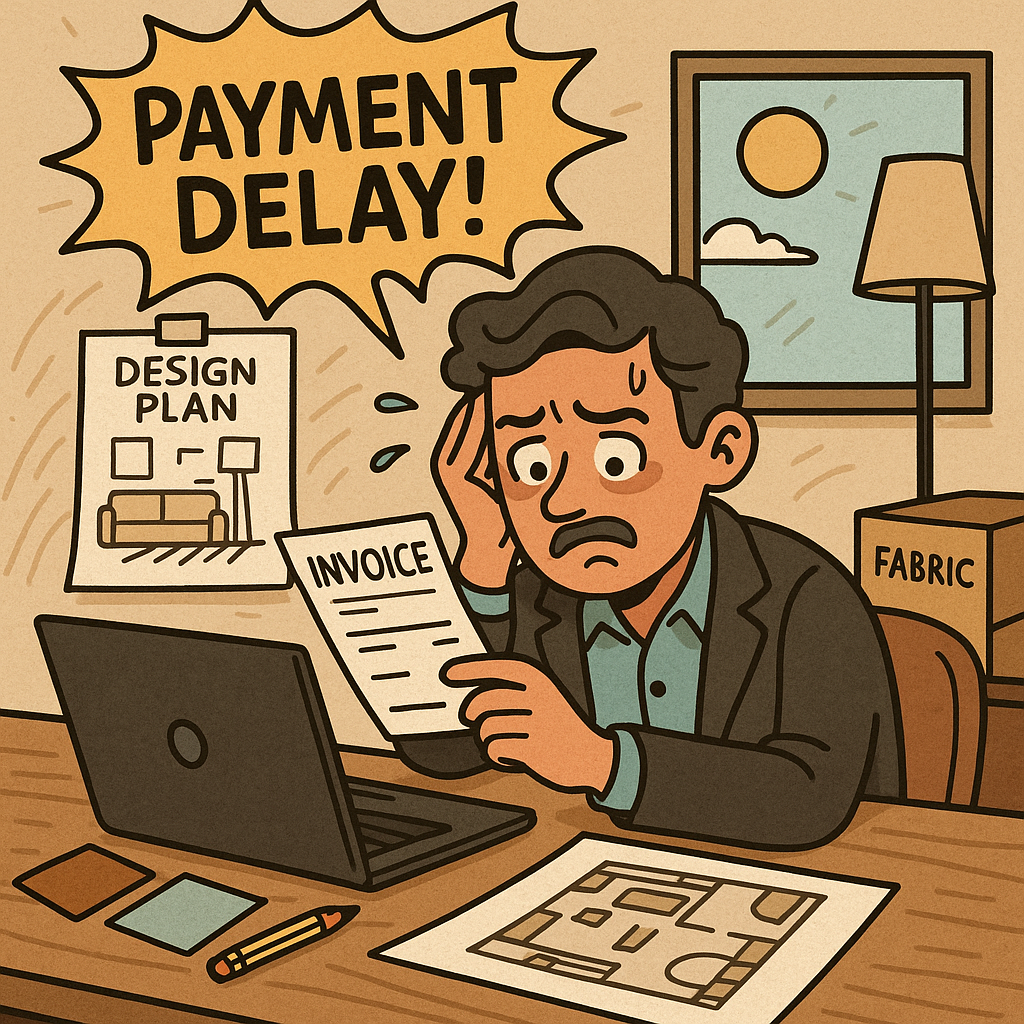
You can specify the perfect lighting temperature, create a flawless mood board, and coordinate every finish to the millimeter — and still watch your design unravel the moment a contractor stops following instructions.
For Florida interior designers, the biggest project risks aren’t creative. They’re contractual, compliance-based, and communication-driven. And when a contractor improvises, substitutes materials, or “interprets” your design differently, the unexpected fallout can land on you — your reputation, your client relationships, and in some cases, your liability exposure.
Here’s how to stay in control before construction surprises you.
1. Get Your Design Intent in Writing
Your drawings, selections, scheduling input, and installation expectations must be documented. If it isn’t written, it’s optional — at least in the contractor’s mind.
Related reading: Designer’s Guide to Change Orders
2. Push for Written Change-Order Procedures
Unapproved substitutions are one of the biggest disputes we see. A contractor choosing “similar” fixtures or cheaper finishes can destroy your concept and create expensive fixes.
Learn why this matters: How Florida Homeowners Prevent Change-Order Chaos
3. Demand Licensing & Insurance Verification
If a contractor is unlicensed or incorrectly licensed, design changes in the field can create compliance problems — and you don’t want your client blaming you.
See: Why Unlicensed Contractors Are a Major Risk
4. Clarify Who Approves What
Contractors often assume interior designers approve pricing, materials, or structural changes. Make it clear in the contract what authority you do — and do not — have.
5. Set Expectations for Installation Quality
Misaligned tile, incorrect lighting height, wrong trim — it’s your vision, but their workmanship. Protect yourself by documenting installation standards and tolerances.
6. Get Ahead of “Contractor Amnesia”
If you’ve ever heard “that’s not what we discussed,” you know why documentation saves projects (and sanity).
7. Have a Backup When Things Go Wrong
When a contractor refuses to fix mistakes, you need fast legal support that protects you and your client.
Start here: What to Do When Contractors Refuse to Fix Mistakes
How Wyman Legal Solutions Protects Interior Designers
- We review renovation contracts for clauses that shift risk onto designers.
- We help clarify your scope to prevent blame for construction mistakes.
- We step in when a contractor’s errors put your reputation at stake.
- We protect you from liability tied to unlicensed or noncompliant work.
Your creativity shouldn’t be undone by construction chaos. With the right protections, your design stays yours — all the way through installation.
Don’t let a contractor derail your design.
We protect interior designers from construction risks and costly mistakes.
Protect your creative vision and your reputation from unlicensed or unreliable contractors.
Andy Wyman, Esq. Speaks at the “Show Me The License” Conference — What Florida Interior Designers Should Know
Port Charlotte, FL — November 2, 2025
Andy Wyman, Esq., founder of Wyman Legal Solutions, presented at the Charlotte-DeSoto Building Industry Association’s “Show Me The License” Home Building & Remodeling Show — focused on licensing, compliance, and contract protections.
Though Andy’s talk — “5 Things Every Homeowner Must Know Before Signing a Construction Contract” — was made for homeowners, its lessons map directly to interior designers who must protect design intent while avoiding unlicensed-contractor exposure.
Why This Matters to Interior Designers
Designers coordinate material selections, specifications, and often site decisions. If contractors skip permits, substitute materials, or operate unlicensed, a designer’s project outcome, reputation, and even licensure risk can be affected.
Key Contract and Compliance Takeaways
- Cost-Plus vs. Fixed-Fee: Understand which payment model supports clear scope and predictable budgeting.
- Progress Payments: Structure payment draws to inspected milestones so contractors have incentive to complete to spec.
- Time Is of the Essence: Use this clause to avoid schedule drift that damages design delivery.
- Change Orders: Require written approvals that state material and schedule impacts before work proceeds.
Professional-Grade Contractor Vetting for Designers
Wyman Legal Solutions offers Contractor Vetting to ensure trades and subcontractors are licensed, insured, and financially stable before you specify materials or approve shop drawings.
We check:
- DBPR license and insurance status.
- Litigation and judgments that may indicate past performance risks.
- Financial stability to avoid payment disruptions.
- References and track record for quality and timeliness.
By vetting the contractor team before work begins, interior designers protect their creative vision, timeline, and client relationships.
Protect your creative scope — and your business reputation.
Your designs deserve protection — and so does your business.
Let’s verify the teams you work with and tighten your contracts.
Protect your creative vision — without inheriting construction chaos.

Lighting Conflicts & Liability Risks: How Florida Interior Designers Protect Their Vision
Every designer knows the moment — the mood board glows, the lighting is perfect, and the client beams. Then the contractor says, “That fixture can’t go there — there’s a beam.” Suddenly your dream design becomes a coordination nightmare. In Florida’s fast-paced construction world, this isn’t just frustrating — it can expose you to liability, lost time, and scope creep.
1. Define your scope and boundaries upfront
Before a single sketch leaves your studio, outline exactly what your role includes — and what it doesn’t. Your design agreement should specify which trades you coordinate with, who issues construction drawings, and where your design responsibility ends. For reference, see Protect Your Scope: Stop Coordination Gaps and Costly Change Disputes.
2. Get changes in writing — always
Verbal “can you just move that?” changes are the downfall of many projects. Any design alteration that impacts structure, lighting, or MEP systems should be confirmed in writing before proceeding. A signed change confirmation protects both your time and your creative intent. Review The Architect’s Guide to Change Orders — the same principles apply perfectly to interior designers too.
3. Protect your credit and creative ownership
Specify in your contract how your designs, renderings, and mood boards can be used. If another professional “builds off” your concept, make sure your credit and copyright stay intact. Need help defining those rights? Read AI in Architecture: Legal Risks for tips on protecting creative ownership.
4. Manage client expectations on-site
When clients see progress, they see opportunities to tweak — but those “simple” tweaks can snowball. Have a documented process for approving field changes. A simple written form or email chain can keep projects under control and expectations realistic.
5. Know when to call a lawyer
Contact a construction attorney if your design has been changed without authorization, if the client refuses payment due to construction issues, or if a contractor blames you for field coordination. Early legal input often prevents escalation and protects your professional record.
6. Keep your reputation spotless
One bad project can echo through your portfolio. Protect your name by making documentation and boundaries part of your brand. See How to Build Trust and Prevent Disputes in Construction Projects for more prevention strategies.
📞 Call (561) 361-8700 to protect your design — before construction begins.
Design disputes or construction surprises?
We help Florida interior designers protect their creative vision — and their bottom line.

